AI consulting for Australian businesses

While you wait,the gap grows.

We build AI into the systems
your business already uses.

Let’s talk

The work.

How AI changed the work
in four businesses.

Accounting Practice — Brisbane

Automate document collection and close month-end faster.

An agent collects, classifies and follows up on client documents, so the team starts with organised files.

Month-end turnaround

Before
5days
With AI
2days

The practice added 14 clients the following quarter with the same headcount.

The challenge

First of the month used to mean five days of chasing. “Just following up on those receipts.” Half the clients replied late. A quarter didn’t reply at all.

The outcome

Month-end went from a five-day slog to a two-day formality. The practice picked up 14 new clients the following quarter — with the same headcount.

What changed

This time, the agent sent every client a personalised document checklist three days before close. As files came in—emails, photos of receipts, forwarded PDFs—it classified each one, matched it to the correct job code, and filed it. When something was missing, it followed up. Politely. Persistently. Without being asked.

Day one: the team walked in with clean, organised packs for 80% of the book. No chasing. No begging. No “sorry, I forgot.”


Property Management Firm — Gold Coast

Manage 4,000+ properties with four coordinators.

Agents triage tenant enquiries, coordinate maintenance and prepare renewals. The team handles complex issues and client relationships.

Properties under management

Before
380
With AI
4,000+

Portfolio growth over 11 months, with the same four coordinators.

The challenge

380 properties. Four coordinators. Every morning started the same way — a shared inbox with 200+ unread emails and a whiteboard full of overdue maintenance jobs.

The outcome

That firm went from 380 properties to over 4,000 in eleven months — same four coordinators. Average response time to tenant requests dropped from 9 hours to 4 minutes. They haven’t posted a job ad since.

What changed

More doors, more revenue. Simple model—except the owner had turned down three new strata contracts that quarter because the team was already drowning.

The agent plugged into the inbox, the property management system, and the maintenance contractor network on a Monday. By Wednesday it was triaging every inbound request—categorising urgency, dispatching the right tradie, sending tenants real-time status updates, and logging everything to the correct ledger. Lease renewals got drafted 90 days out with market-adjusted rents. Routine inspections got scheduled, tenants got reminded, and reports got pre-filled with notes from the last visit.

The coordinators stopped being email processors and started being relationship managers. They handled the complex stuff—difficult tenants, landlord negotiations, tribunal prep. The work that actually needed a human with judgment.

Professional Services Consultancy — Melbourne

Qualify leads and book calls automatically.

An agent responds to enquiries, asks qualifying questions and schedules a discovery call. The consultant gets a brief before the meeting.

Lead-to-close rate

Before
18%
With AI
41%

Lead-to-close rate increased in the first quarter.

The challenge

A prospect hit the website at 2:14am. Filled out the enquiry form. Previously, that meant a “thanks, we’ll be in touch” auto-reply and a sales call 11 hours later.

The outcome

That consultancy’s lead-to-close rate went from 18% to 41% in the first quarter. Their competitors are still drafting the follow-up email.

What changed

This time, the agent responded in 90 seconds. Asked three qualifying questions. Sent a tailored capability brief based on the answers. Booked a discovery call for 9:30am—directly into the consultant’s calendar. At 7am, it sent the consultant a prep brief: who the prospect was, what they needed, what they’d already been told, and which case study to lead with.

The prospect walked into the call feeling like they’d been working with the firm for a week. They signed that afternoon.

Your workflow, with agents.

See what changes when agents take on the routine work.

Agent swarms · Example / Preparing a client proposal

Put a team of agents on one request.

Before

Your team handles each task and handoff.

Client brief
  1. Research the client
  2. Check requirements
  3. Draft & approve
Proposal ready

With agents

Specialists work in parallel. You approve the result.

Client brief

Specialists work in parallel

  • Research
  • Check
  • Draft
One combined draft
Your teamReview & approve
Proposal ready
What changes

Agents share findings and work on separate parts concurrently. Your team sets the direction and approves the proposal.

Review agents · Example / Checking contracts against agreed terms

Check documents against your rules.

Before

Your team reads, cross-checks and records the findings.

Incoming documents
  1. Read each file
  2. Compare the terms
  3. Record issues & decide
Review complete

With agents

Files are checked together. You decide what needs action.

Incoming documents

Review agents check together

  • File 1
  • File 2
  • File 3
Findings + source links
Your teamResolve the issues
Review complete
What changes

Agents check multiple documents against your rules. Your team gets the findings and source references for review.

Voice agents · Example / Incoming customer calls

Answer enquiries and book appointments.

Before

Each call pulls someone into questions, bookings and admin.

Customer calls
  1. Answer or call back
  2. Ask & check availability
  3. Book & write the notes
Booking + notes

With agents

Routine calls become bookings, including after hours.

Customer calls
Voice agentAnswer & qualify

Available after hours, too

  • Book
  • Log the call
Booking + call summary
Your teamTake over if needed
What changes

The agent answers, qualifies and books within your rules. Your team gets the context and handles calls that need a person.

Illustrative workflows. Built around your systems, rules and approvals.

Start with
one workflow.

  1. Find the bottleneck

    Choose one problem and agree how we’ll measure success.

  2. Build a working pilot

    Connect it to your systems, with people reviewing the decisions that matter.

  3. Measure. Then expand.

    Check the results, train your team and build on what works.

Our full approach

How we can help.

Strategy & Roadmap Choose the right starting point.

We look at how your business works, identify where AI could save time or improve service, and put the priorities in order. You get a plan with owners, timelines and clear measures of success.

Discuss your strategy
Workshops Build your team’s AI skills.

Hands-on sessions using your team’s own work. Learn to use AI for research, admin and everyday tasks, check its output, and handle business data safely.

Discuss a workshop
Agent Engineering Automate work in your existing systems.

We build AI agents that sort requests, draft replies, reconcile information and follow up. They connect to the systems you already use, with monitoring and human review where it matters.

Discuss an agent build
Security Audit Know where your data goes.

Find out which AI tools your team uses and where business data is going. We assess the risks and set practical rules for access, approved tools and handling sensitive information.

Discuss a security audit

Meet your team.

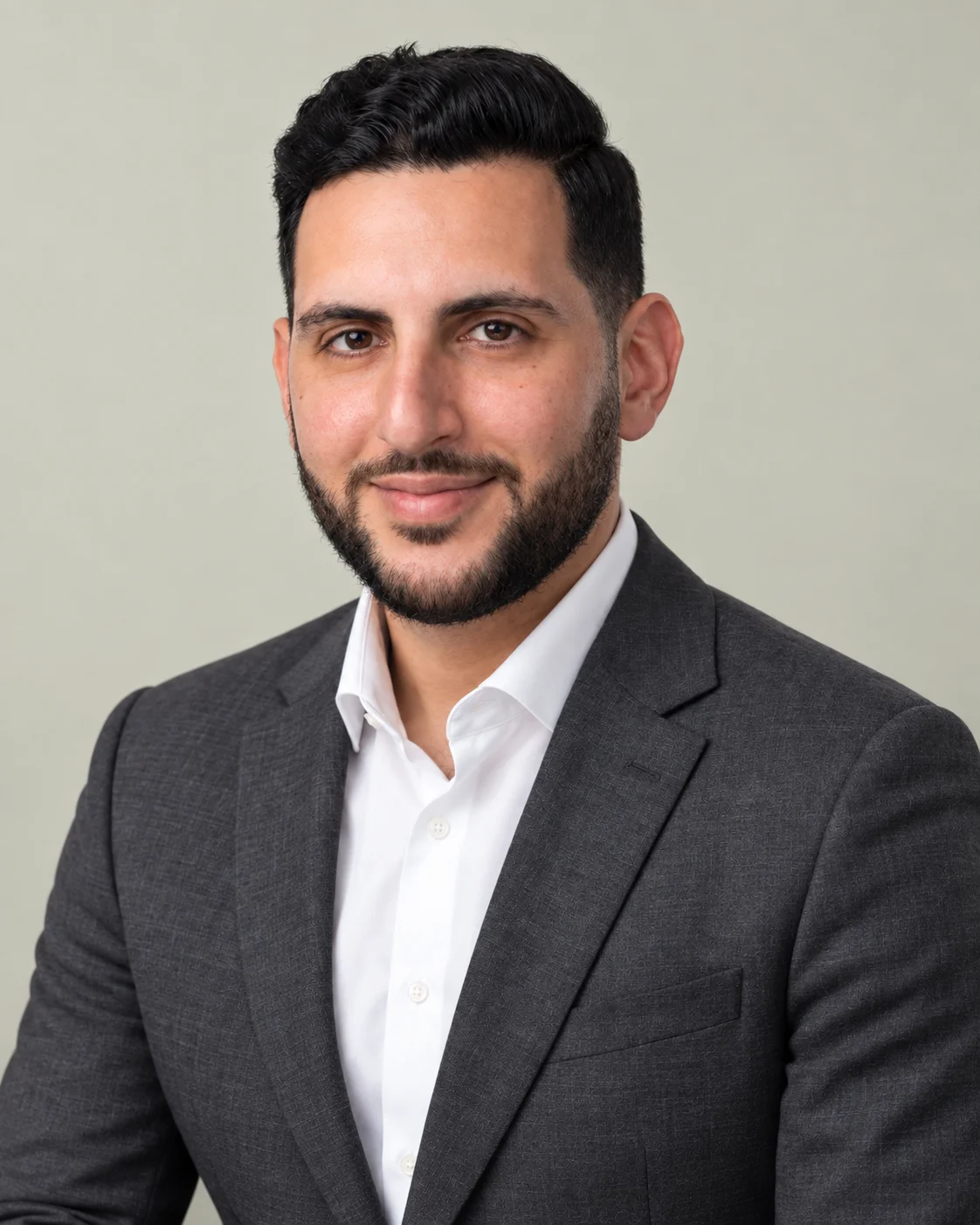
Costa Charalambides

Costa Charalambides

Automation Operatir

Led finance at one of Australia’s largest wealth and accounting firms.

Read bioClose bio for Costa Charalambides

Costa has seen first-hand how AI changes financial operations at enterprise scale. He brings that perspective to identifying where it can make a practical difference in a business.

Mario Koulloupas

Mario Koulloupas

Workflow Operatir

Property and procurement leadership, with experience in property development.

Read bioClose bio for Mario Koulloupas

Mario connects operational detail with wider business change. He translates complex property and procurement workflows into AI systems that make the work easier to coordinate.

Peter Fotinis

Peter Fotinis

Agent Operatir

Built and scaled engineering teams from startup to enterprise.

Read bioClose bio for Peter Fotinis

Peter’s work with AI spans early model experimentation through to coordinating networks of agents. He brings an engineering leader’s perspective to systems that can take on the work of entire teams.

Chris Koulloupas

Chris Koulloupas

Growth Operatir

Transformed PropTech businesses through AI, connecting bold commercial strategy with operational change.

Read bioClose bio for Chris Koulloupas

Chris brings a sharp commercial perspective to AI transformation. His work in PropTech has reshaped how businesses operate and pursue growth. At Operatir, he connects market opportunity with execution, helping ambitious businesses turn AI capability into a lasting competitive advantage.

Human direction. Machine scale.

Extraordinary reach.

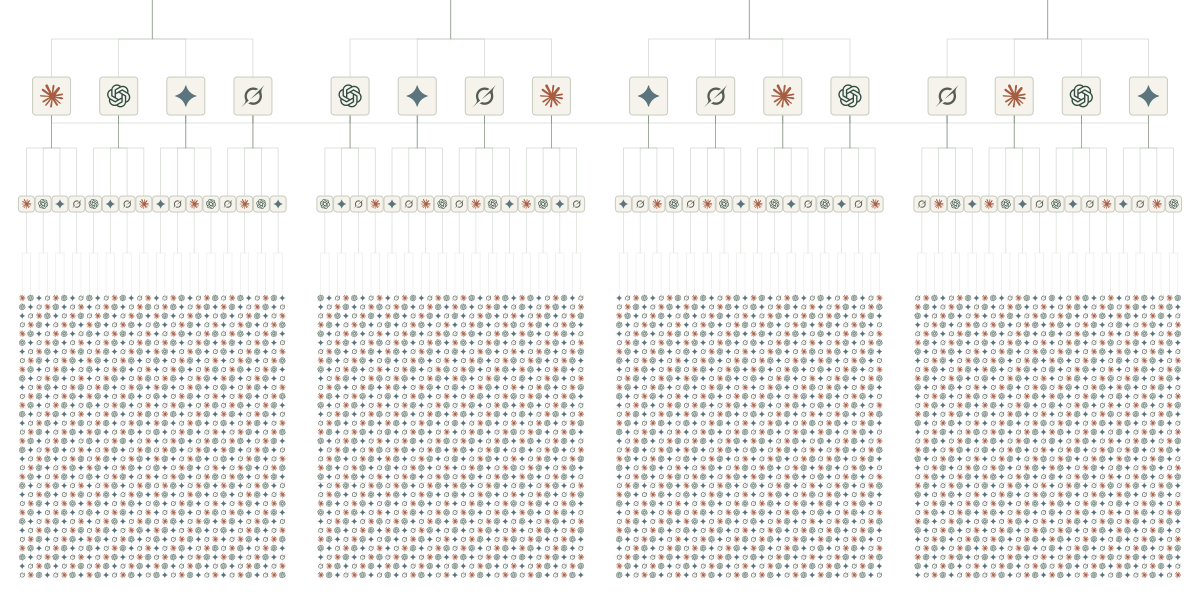
Thousands of specialist agents. Working together.
With people accountable for the outcome.

Each team member directs teams of Claude, OpenAI, Gemini and Grok agents. Connections show delegation and coordination between teams.

ClaudeOpenAIGeminiGrok

Illustrative network · 4,176 agents

Questions?

Ask us directly
Is Operatir a fit for a business our size?

We work with organisations of 5–100+ people, particularly where repeatable workflows, knowledge work and coordination create significant overhead. Common sectors include professional services, property, accounting and legal.

Can we start with one workflow?

Yes. We identify and prioritise opportunities, pilot agents in real workflows, and measure performance against a baseline. Once the return is proven, we expand to adjacent workflows. A hands-on workshop is another way to get started.

Will this work with our existing systems?

Our agents are designed for your actual workflows and integrated with your systems. We begin by auditing your operations and prioritising the highest-impact, most feasible opportunities, so engineering is grounded in how your business works.

How do you approach data and human judgement?

Security and governance are part of delivery, alongside engineering. We assess AI tool usage and exposure, establish controls, and design workflows so your people can focus on decisions and exceptions that need human judgement. Governance guidance and runbooks are part of what you take away.

What happens when we get in touch?

Tell us about your business and the work you want to improve. We can discuss where AI fits, the risks to address and a useful starting point — whether that is a workshop, an opportunity roadmap or a specific workflow to build around.

What’s slowing
your team down?

Tell us where the work gets stuck.
We’ll work out whether AI can help.

[email protected]

Email us to start a conversation